Making of: Andorian Mask
Many people here and at Destination Trek have asked me how I made my Andorian prosthetics. Alright, I'll show you the process. You can find details under each picture. Please note that these are my first foam latex prosthetics, so I think there are other ways to make them. Be nice 😉 .
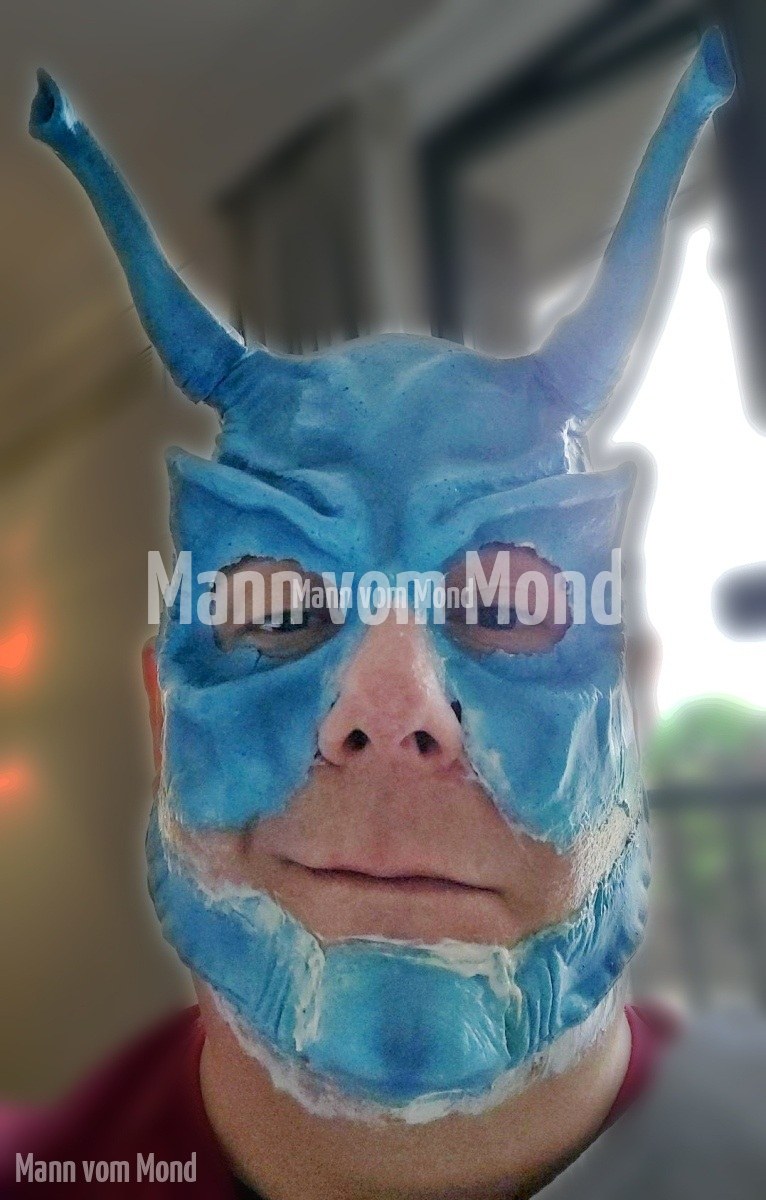
I wanted to make a mask that was easy to apply and where I could move my face. So I decided to split the makeup into 8 parts: A wig, a bald head (because the forehead piece extends past my hairline), a forehead piece, two jaw pieces, a chin, and two removable antennae for easy transport.
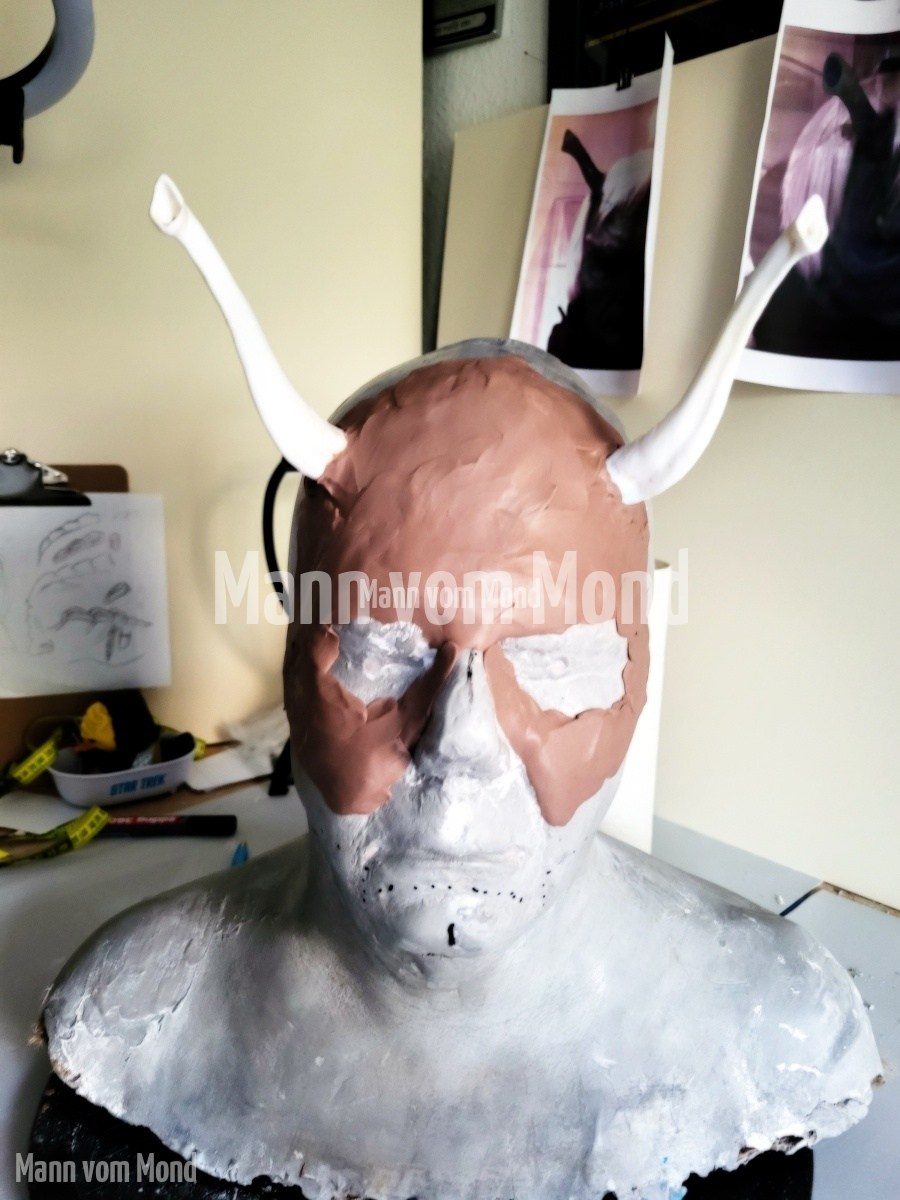
Ich begann damit, meinen Lifecast mit Alcote zu bedecken. Das hilft, die einzelnen Teile des Abgusses für das Abformen zu erhalten. Ich begann die Maske mit Monster Makers‘ Monster Clay Medium zu modellieren. Die Basis für die Antennen war ein 3D-Druck, den ich noch hatte. Hier kann man einige Punkte sehen, an denen ich die Maske in die verschiedenen Teile schneiden wollte.

After covering all the necessary areas with Monster Clay, I added primary shapes - these are the shapes that form the shape of the skull.
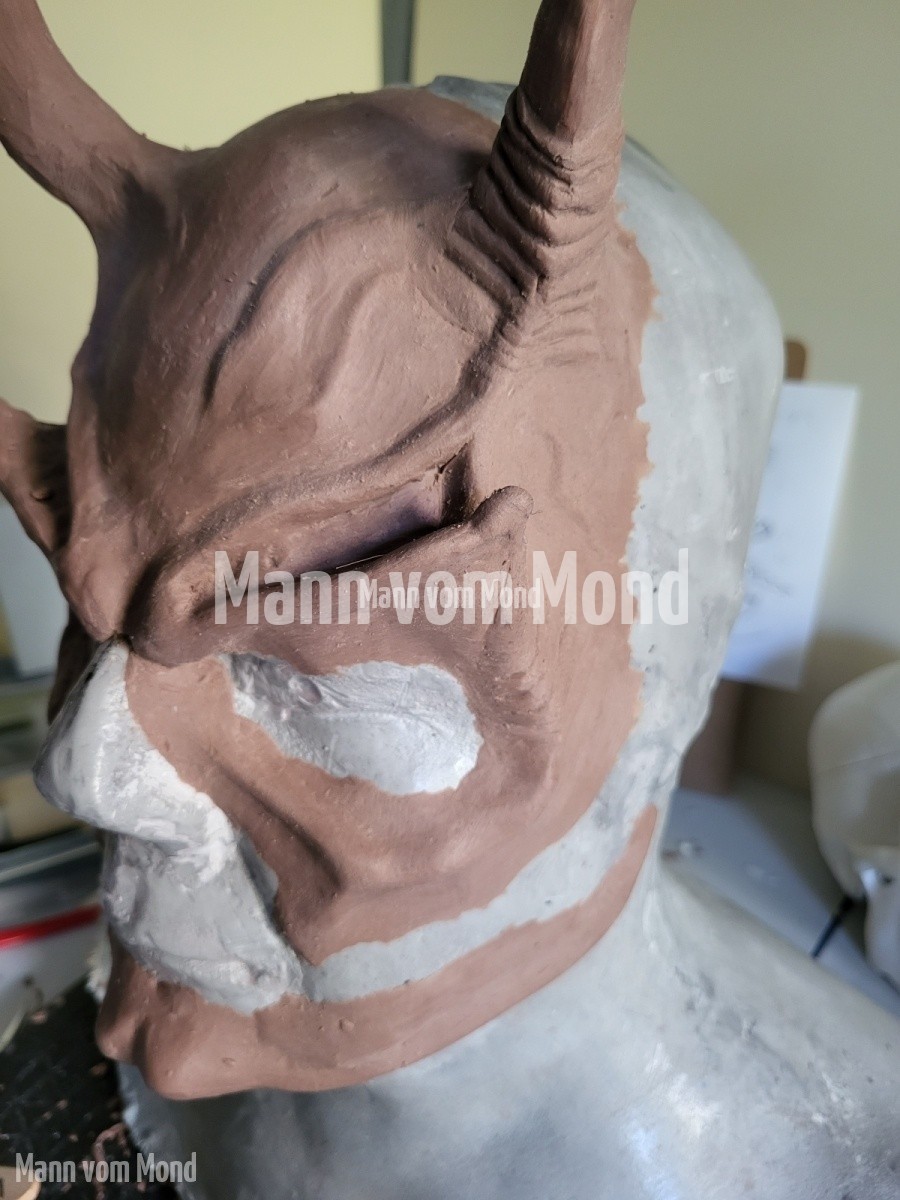
Then I added more details in the form of secondary shapes. I used several reference photos from Discovery and even some from Strange New World's Hemmer because I wanted to a) give the mask my own fingerprint and b) add details that Discovery's creators didn't use (like veins and a more angular, bony look).
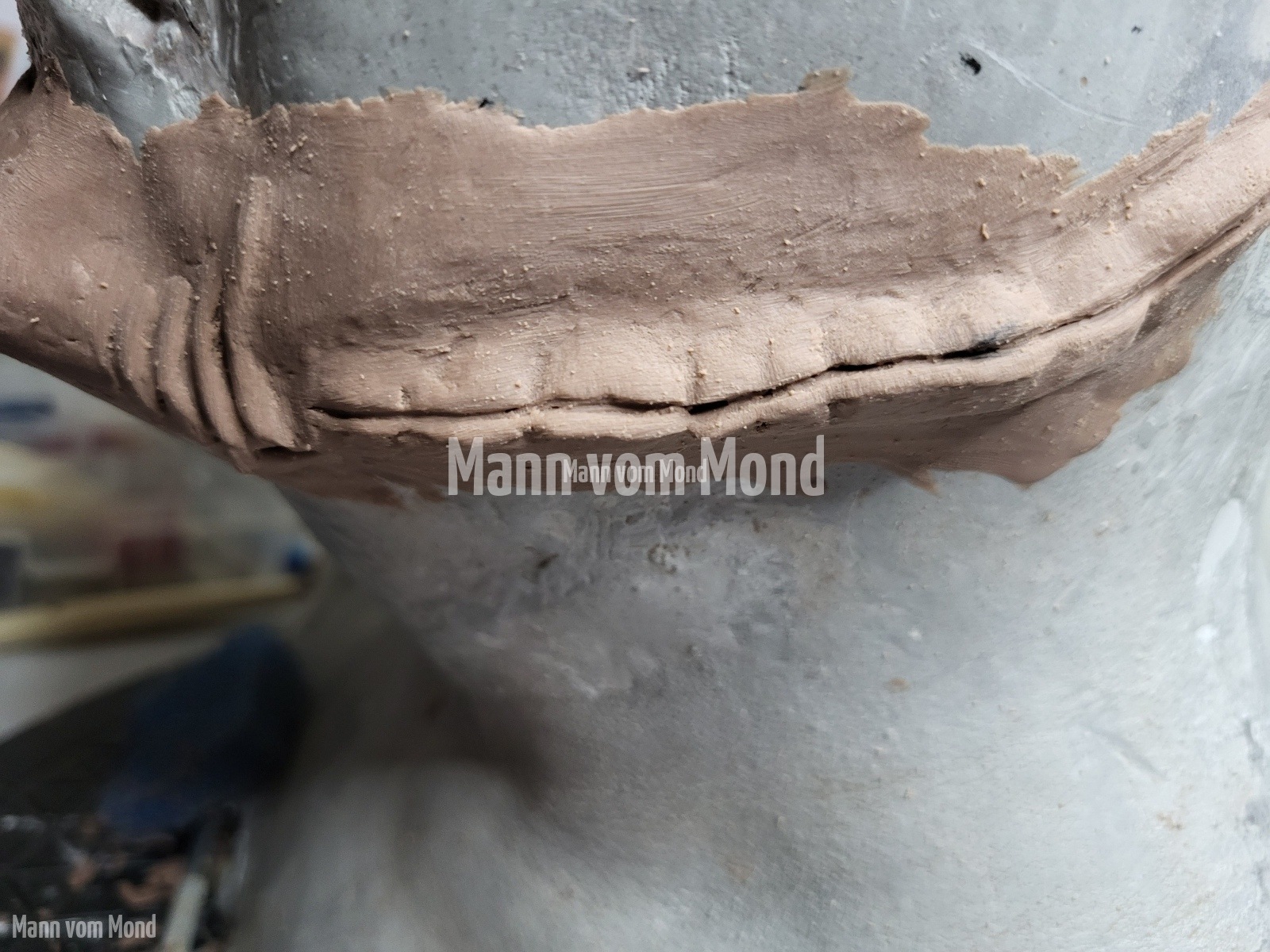
I had to be very careful when modeling the jawline and chin, knowing that I would have to make cuts for the individual pieces here to ensure that these pieces would fit back together later.
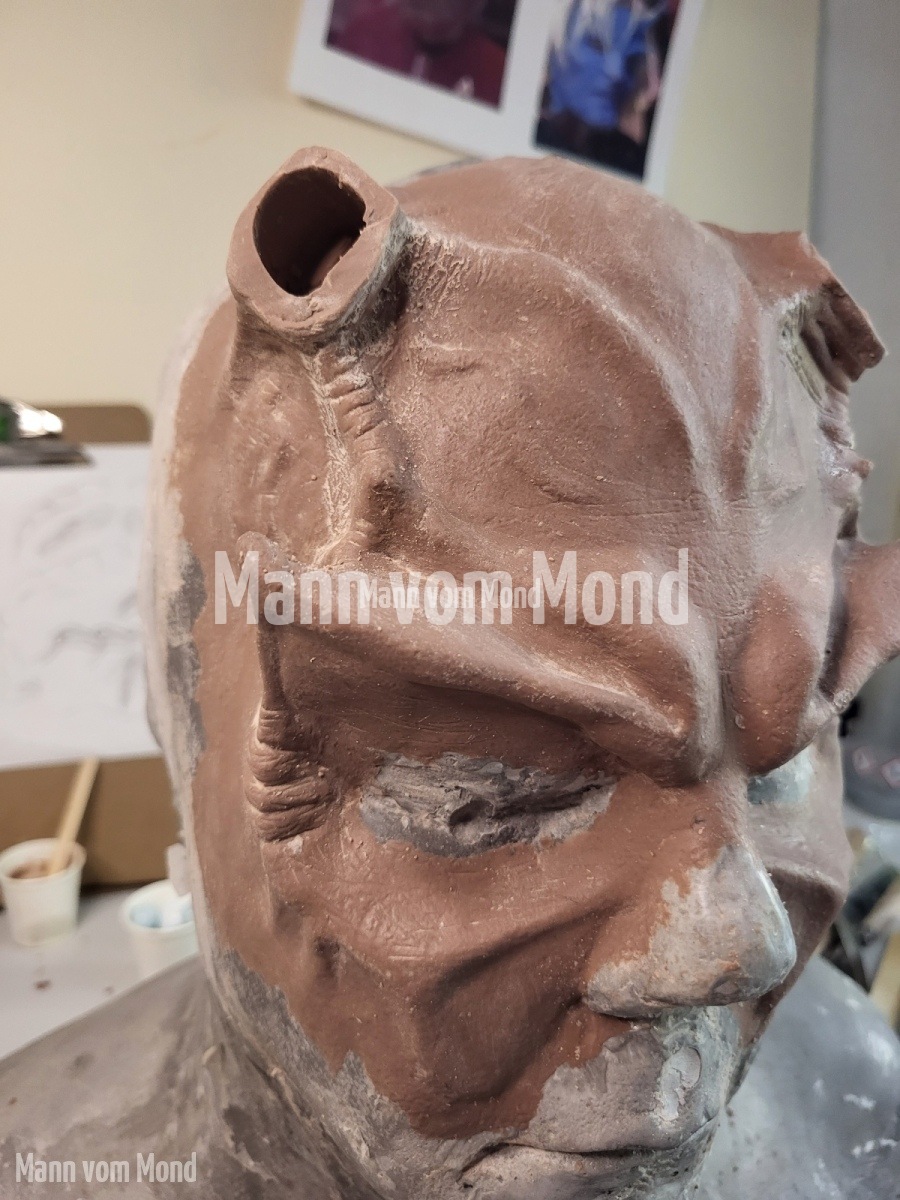
Then it was time for the first cut (and the first cut is always the deepest...). I took off the antennas so I could cast them separately in epoxy.
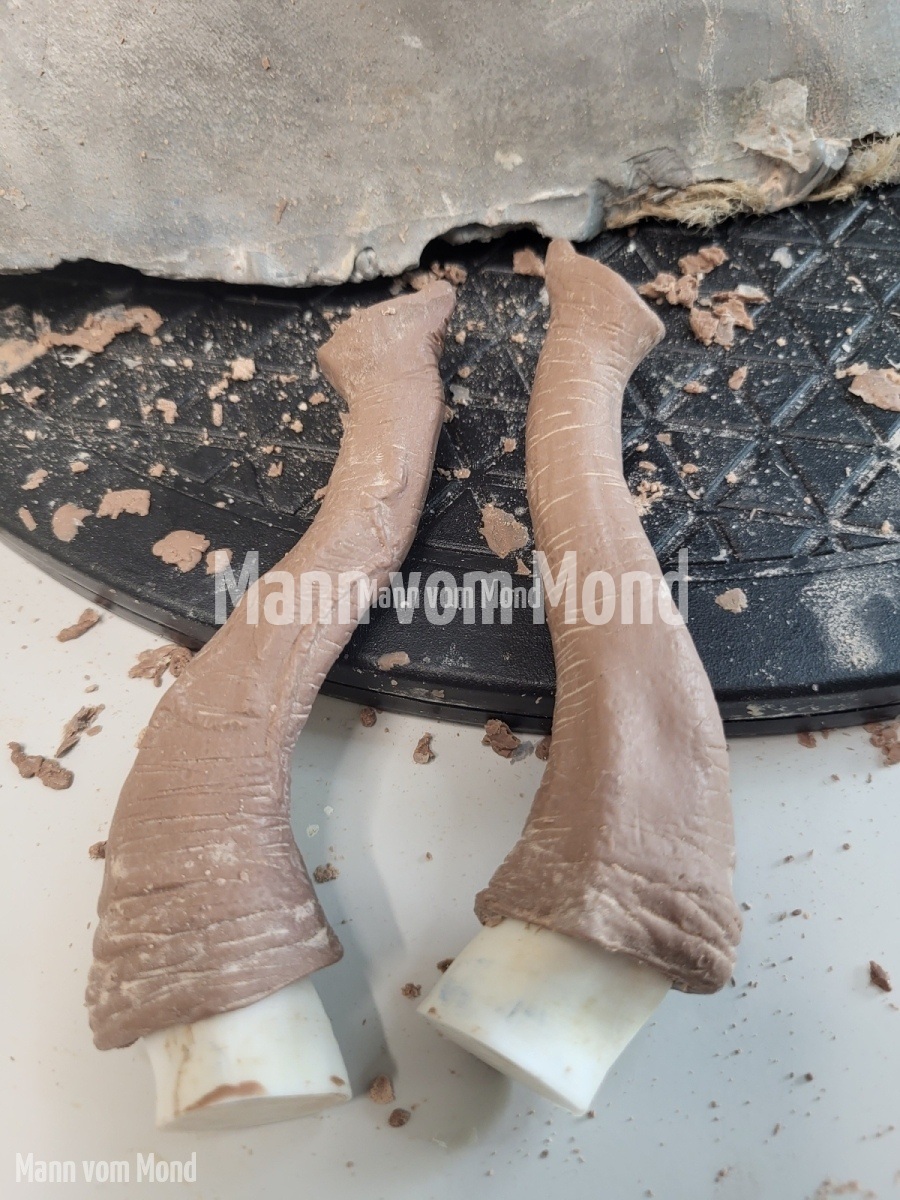
I decided against casting them in foam latex because I wanted them to be as strong and light as possible. So I decided to use epoxy resin. After casting, each antenna weighs less than 20 grams. If you want to see how I molded them, I made a video on my Instagram. Have a look!
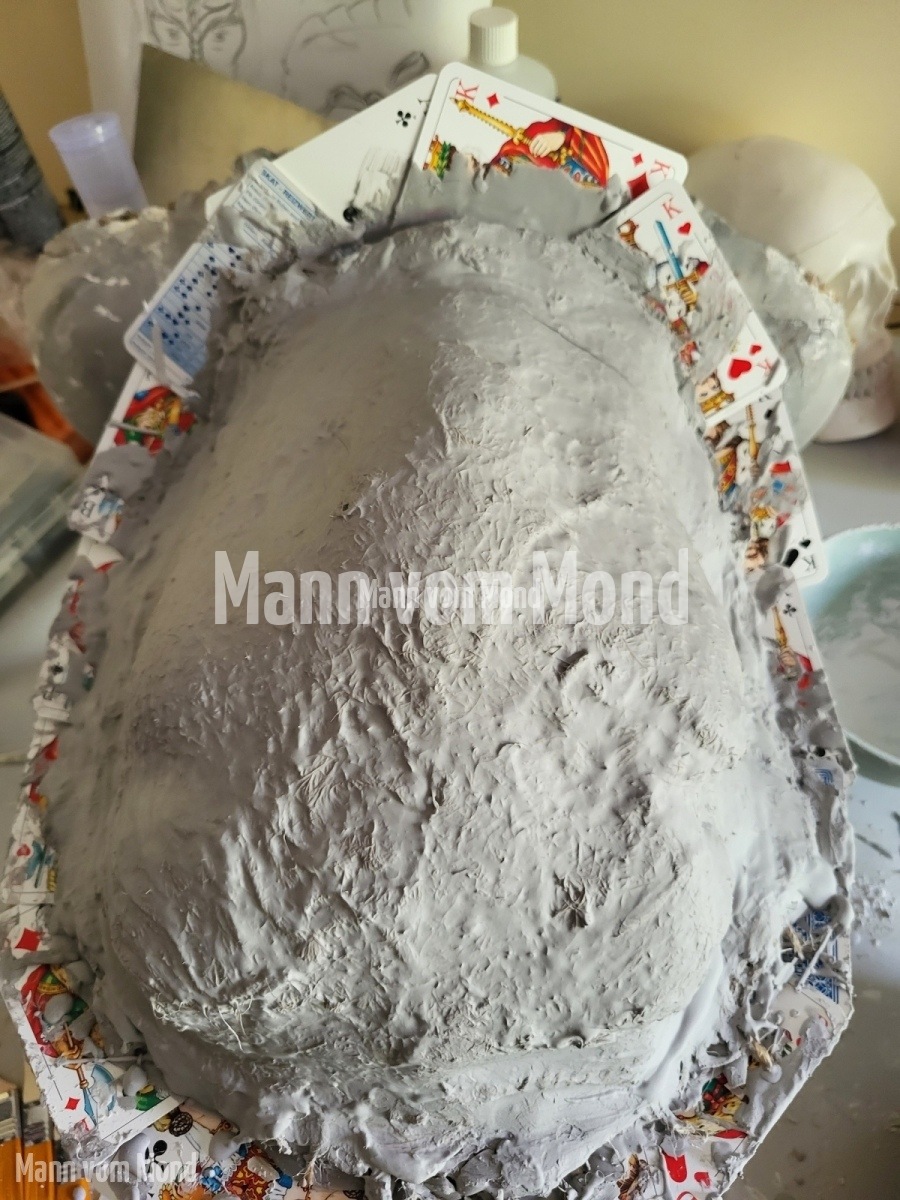
Unfortunately, I didn't take a picture of me cutting the chin and jawline into pieces. Anyway, when I did, the entire lifecast had to be placed in a bucket of water. This loosened the alcote and the monster clay came off, ready for custom mold making. Here I am molding the piece of the forehead.
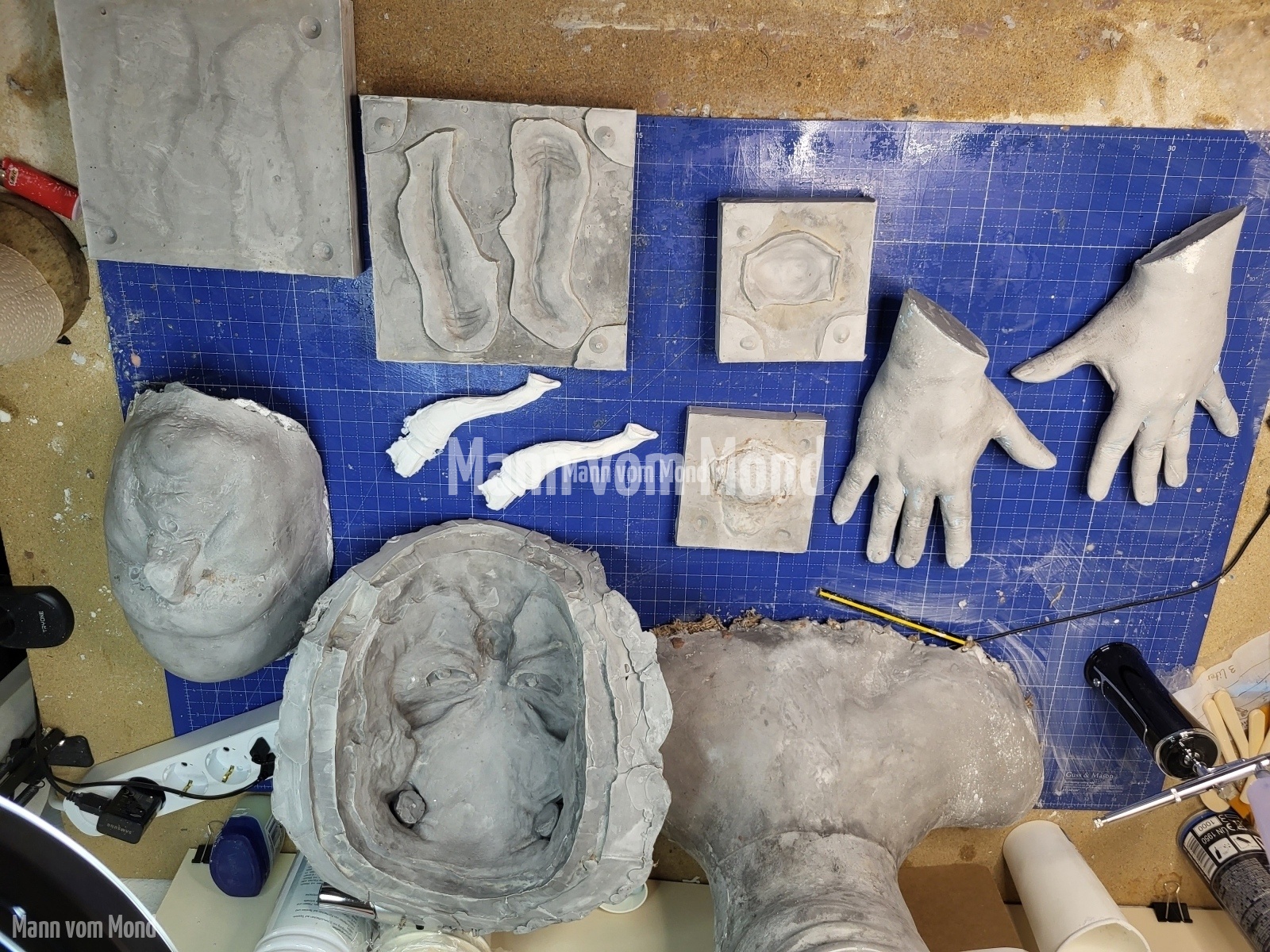
So this is what it looked like after molding. I made the jaw and chin as flat shapes, and the forehead is a basket shape. I also wanted to put gloves on, so you can see the hands. But I didn't have time for that in the end.
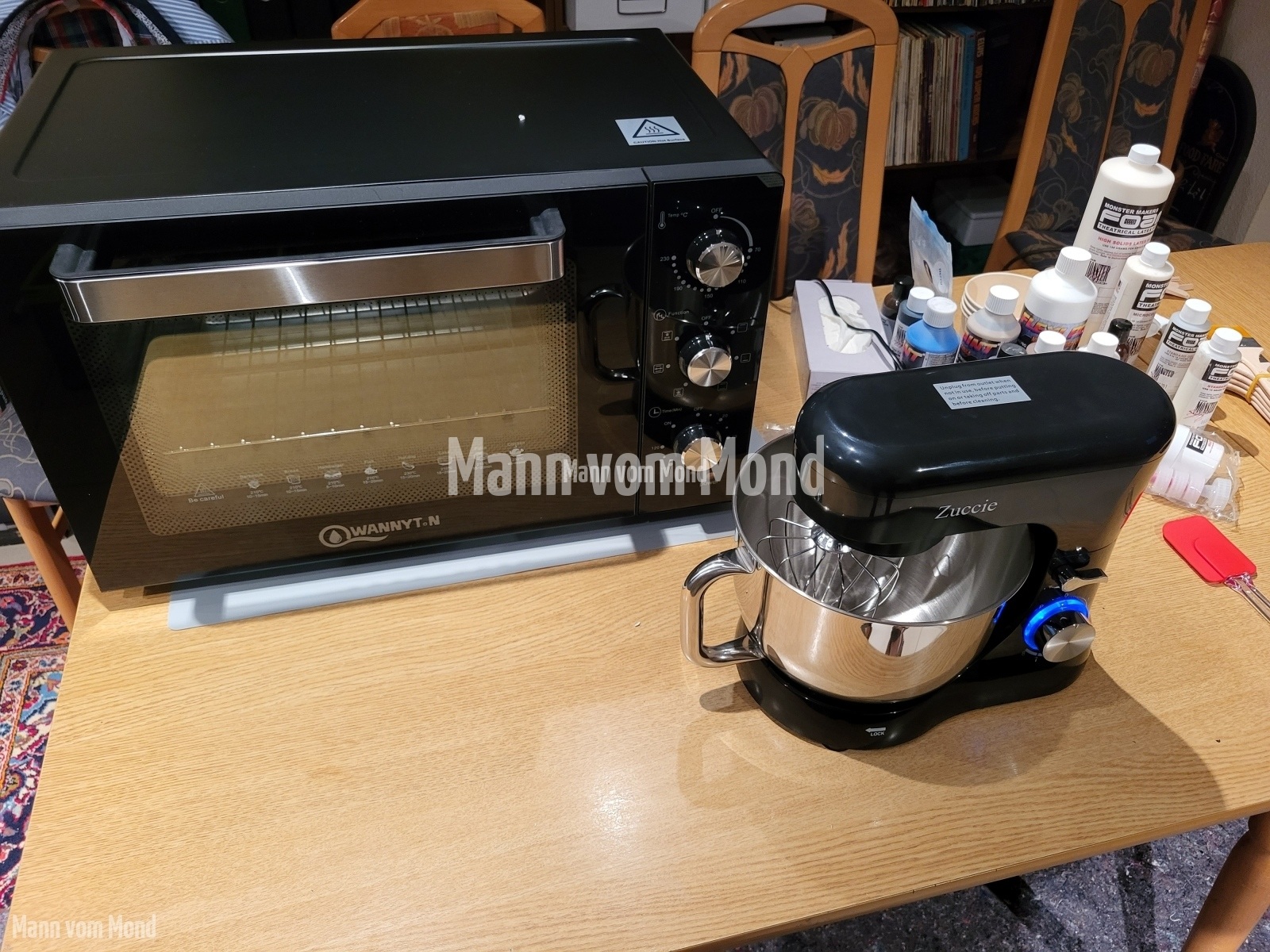
So, that's my equipment for the foam latex cooking process.I bought an oven because foam latex oozes ammonia, so you can't do it in an oven you use for food.I also bought a heavy-duty blender and Monster Makers' foam latex kit, which included everything I needed to cast the prosthetics (latex, foaming agent, gelling agent, mold release agent).
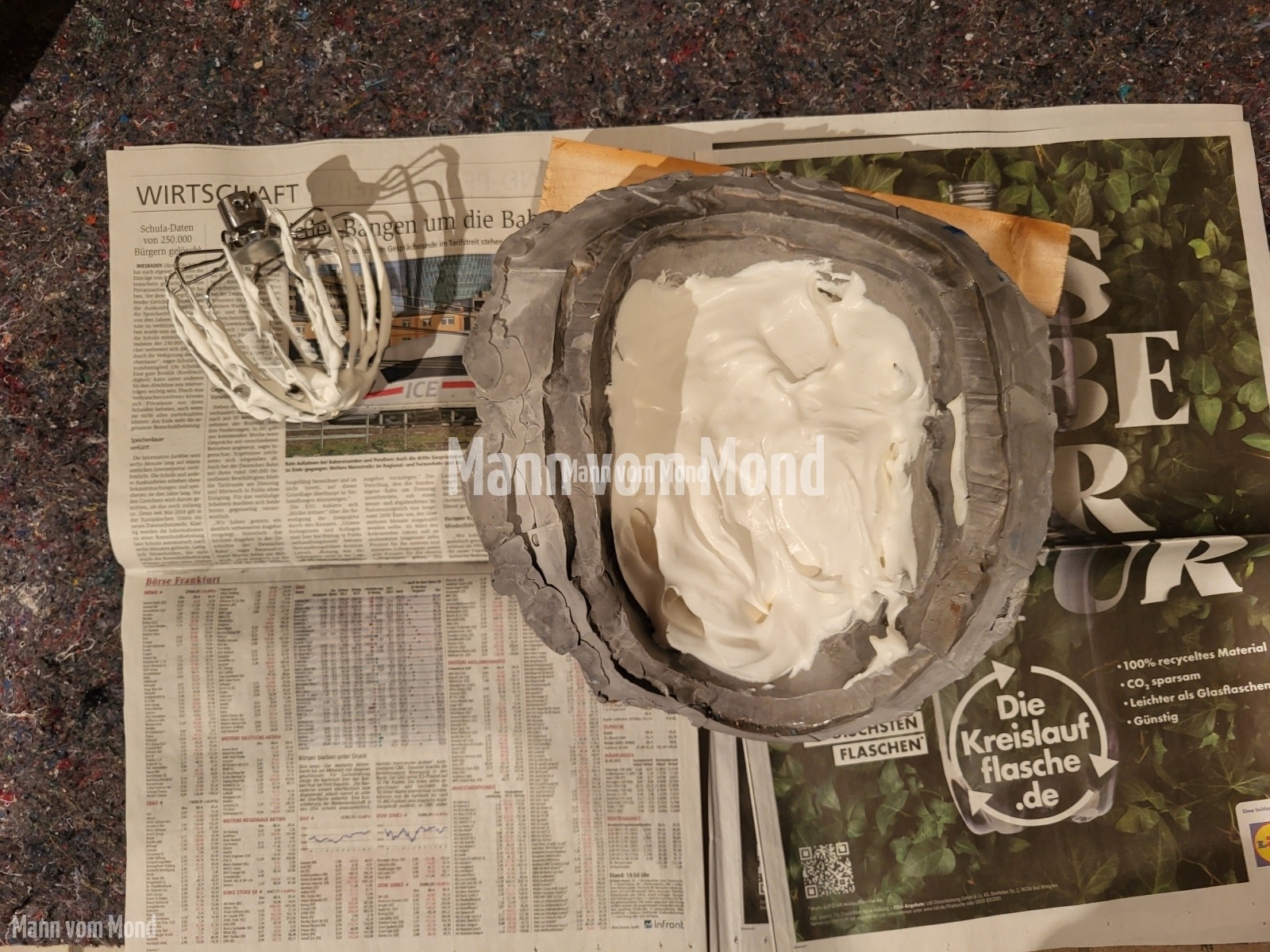
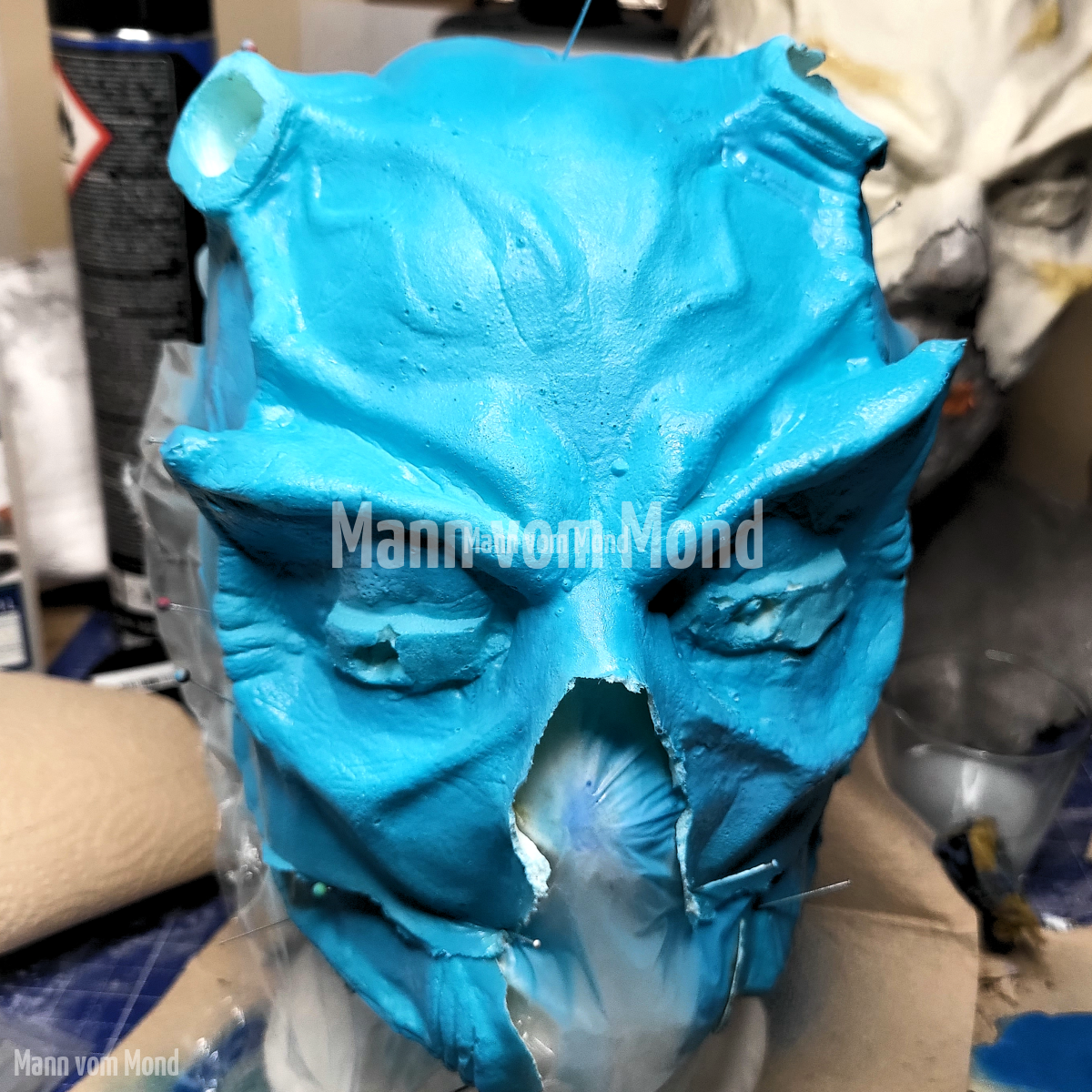
I can't stress this enough: Foam latex is a princess. The ambient temperature and humidity have a huge impact on the outcome of the mask. So I had to make several passes before I had my first decent puff.
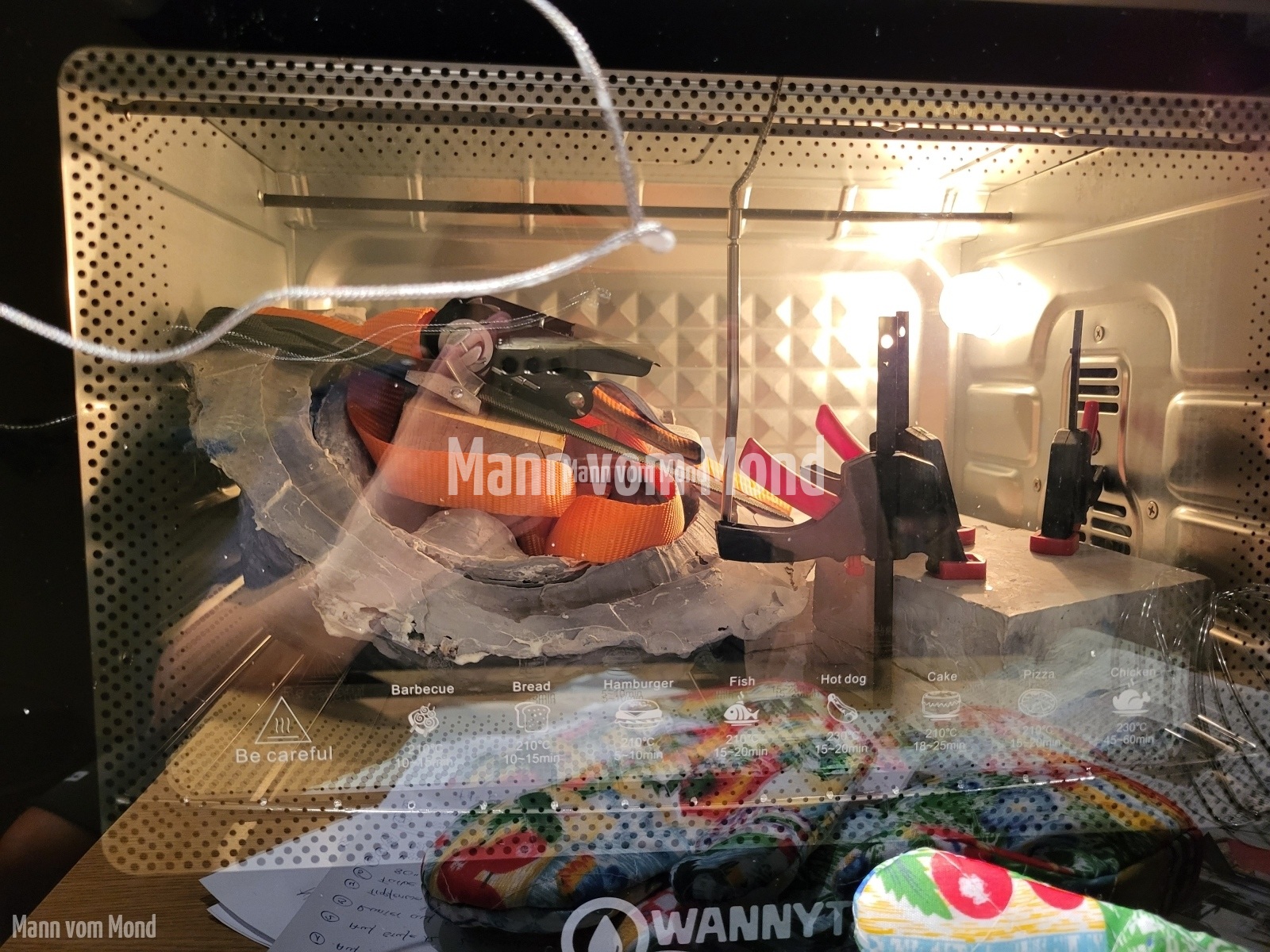
I also had to figure out how to get the oven to maintain the right temperature, and I had to figure out how long to cook the latex.This was really tricky. So if you want to make your own masks, don't just rely on the instructions that come with your foam latex.

Dies war einer meiner ersten Versuche.Man kann sehen, dass der Schaumstoff den „Stöpsel“ für die Antennen nicht ausfüllt.Außerdem gibt es etwas, das man „Laking“ nennt, d. h. Stellen, an denen unerwünschter Luftdruck dünnere Stellen im Latex hinterlassen hat.
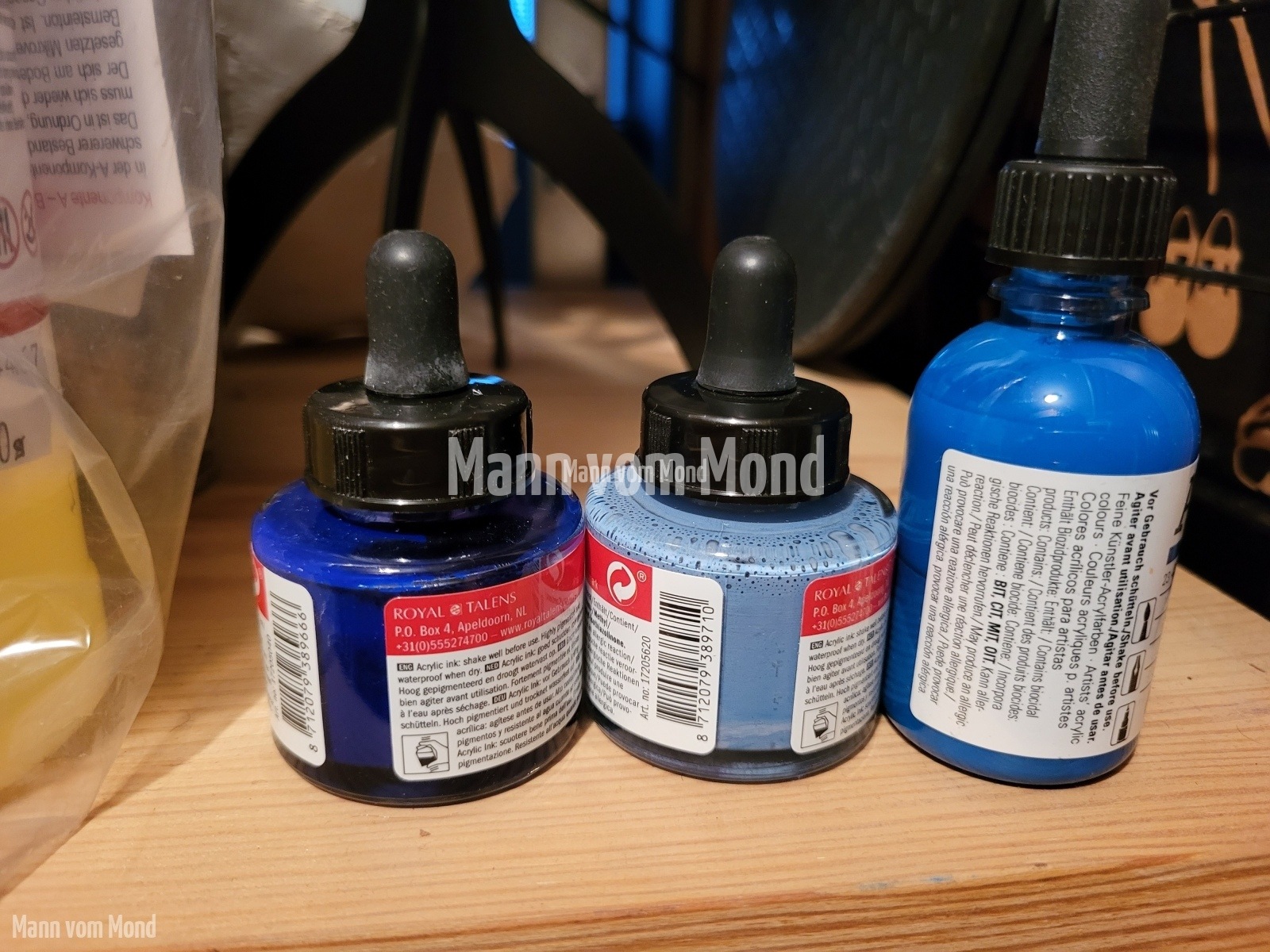
I used several techniques to paint it.My first recommendation is acrylic paints.I love that you can use them with an airbrush. I mixed a base shade that was identical to my alcohol activated makeup instead of the other way around.
For the base, I mixed acrylic ink in FlexiPaint clear.FlexiPaint is a paint for latex so it doesn't get brittle when the mask moves and the paint sticks.

To achieve a vibrant, skin-like look, I used different types of paint and techniques.First, I mixed acrylic paints with ProsAide skin glue. This gives an opaque and flexible color that is perfect for larger areas. Of this, I dabbed on a dark blue and a light blue layer with a sponge.Then, I mixed a very light blue and a rather dark blue and used a toothbrush to spray tiny dots on the masks to make them look like blood vessels.After that, I used acrylic ink to add the shading.
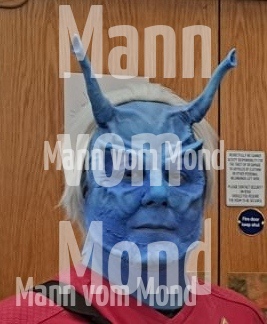
Then came the hardest part: applying the makeup. I started with the bald cap. Using ProsAide, I glued the prosthetics to my face, continued with the forehead, and glued in the antennae. Then the jawline was glued on. The chin was made to cover the front lines of the jawline, so this was the last part. I used ProsAide Cream to cover some of the thicker transitions. Then I used alcohol-activated ProAiir Solid and Eulenspiegel Aqua Makeup to fill in the pink areas of skin between the dentures. Some details like a blue eyeliner were added.
no images were found
All in all, I was quite pleased with the mask. Was it worth all the hassle, money, and tantrums?I would say yes.I had a lot of fun learning all the techniques and creating the mask. Let's see what next year brings.
Syzybille
Lotta Work well done!!!